- Business Hours: Mon - Sat 7:00am - 5:00pm
4.9 Rating
Elite Landscape & Mini Excavation
4.9 Rating

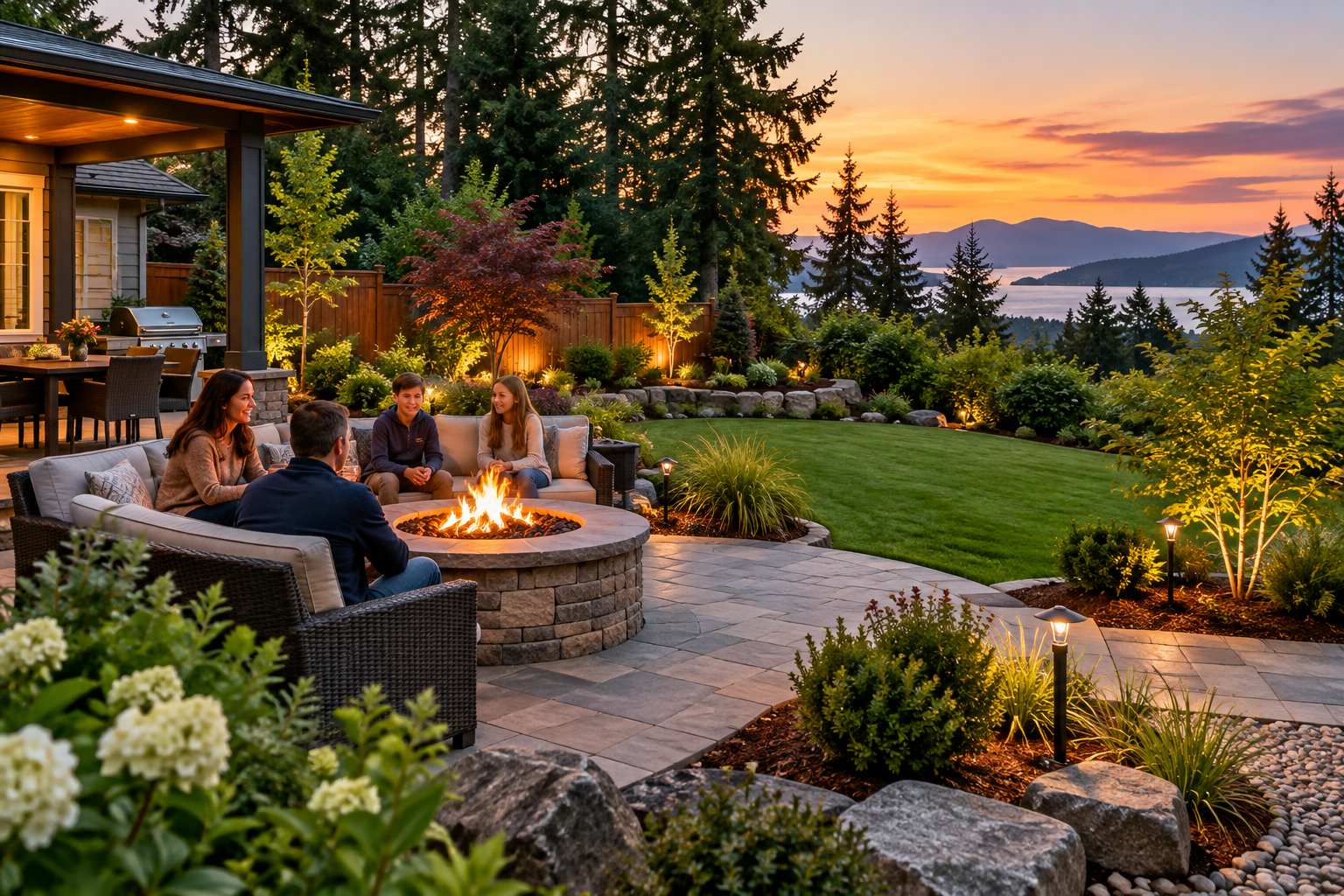
A backyard can offer much more than a lawn and a place to store the barbecue. With the right planning, even an awkward, sloped or underused yard can become a comfortable outdoor living space that feels like an extension of your home.
For homeowners in Northwest Washington, creating a functional backyard also means thinking beyond appearance. Rainfall, drainage, soil conditions and changing seasons can all affect how well an outdoor space performs throughout the year.
Before starting your next backyard project, here are some important things to consider.
One of the biggest mistakes homeowners can make is choosing landscaping features before deciding how they actually want to use the space.
Think about what would make you spend more time outside. Do you want an area for outdoor dining? A fire pit where friends and family can gather? More room for children or pets? A quiet garden area? Perhaps you simply want a level patio where you can relax during the summer.
Many yards can accommodate several activities by creating separate outdoor “zones.”
For example, a backyard might include a patio near the house, a lawn for recreation and a landscaped border that creates privacy around the property.
Once you understand how the yard will be used, it becomes much easier to determine where landscaping, hardscaping and other improvements should go.
A beautiful outdoor living area isn’t very useful if portions of the yard turn muddy or collect standing water whenever it rains.
This is especially important for homeowners throughout Northwest Washington, where wet weather can reveal problems that aren’t always obvious during summer.
Before installing patios, walkways, planting beds or other features, watch how water moves across your property during heavy rain.
Low spots, compacted soil, poorly directed downspouts and improper grading can all contribute to drainage problems.
Depending on the property, solutions could involve adjusting the grade, installing drainage systems or using professional excavation services to properly prepare an area before additional landscaping begins.
Correcting these issues before building an outdoor living space can help prevent much larger problems later.
Homeowners sometimes look at a sloped backyard and assume there isn’t much they can do with it.
In reality, changes in elevation can create interesting opportunities.
A professionally planned landscape may use different elevations to create separate areas for seating, gardens, lawns or entertaining. Steps, pathways and retaining features can help connect these spaces while making the yard easier to navigate.
However, changing the grade of a property shouldn’t be approached casually.
Moving soil can affect where water travels, and improper grading may direct water toward the home or neighboring properties. That’s why excavation, drainage and landscaping often need to be considered together when significantly changing a yard.
Privacy can dramatically change how comfortable an outdoor living space feels.
Trees, shrubs and landscape beds can provide natural screening while adding texture and color to the property. Strategic plant placement can also help define different sections of the yard without making them feel completely separated.
Before planting, consider how large trees and shrubs will become at maturity.
A plant that looks perfect when it is first installed could eventually block a walkway, crowd the house or require frequent trimming if it isn’t given enough room.
Thoughtful landscaping considers what your property will look like several years from now—not just the day the project is completed.
An elaborate backyard isn’t necessarily a better backyard.
Consider how much time you realistically want to spend maintaining your outdoor space.
Large lawns require regular mowing and edging. Certain plants need seasonal pruning. Trees drop leaves and debris. Patios and walkways may occasionally require cleaning.
Combining lawn areas with landscape beds, hardscaping and carefully selected plants can reduce maintenance while still creating an attractive property.
Professional lawn care can also help keep grass healthy and maintained while allowing homeowners to spend more time enjoying their yards rather than constantly working on them.
You don’t necessarily need to complete your backyard transformation all at once.
You should, however, have a plan.
For example, installing an expensive patio and later discovering that heavy equipment needs to cross it to correct a drainage problem isn’t ideal.
Think about grading, drainage, excavation, utilities, patios, walkways, lawns, irrigation and planting areas as parts of one larger project.
The Washington State University Extension also provides useful information about gardening, plants and sustainable landscape practices for Washington homeowners.
Planning the entire property first allows projects to be completed in stages without earlier improvements getting in the way of future work.
The best outdoor spaces aren’t necessarily the largest or most expensive. They’re the ones homeowners actually use.
Whether you’re considering a simple landscape refresh or a larger backyard transformation involving grading and excavation, start by understanding the property itself.
Elite Landscape & Excavation helps homeowners throughout Bellingham and surrounding Northwest Washington communities improve their properties with landscaping, lawn care and excavation services.
If you have an outdoor space that isn’t living up to its potential, contact Elite Landscape & Excavation to discuss your ideas and request a free quote.